
The Education of Statistical Intuition
Thinking, Fast and SlowThis flow traces the repeated confrontation between vivid causal stories and the impersonal logic of statistics.
increasing Bearing strength in each event
 decreasing
Bearing strength in each eventdecreasingSmall Sample Surprise
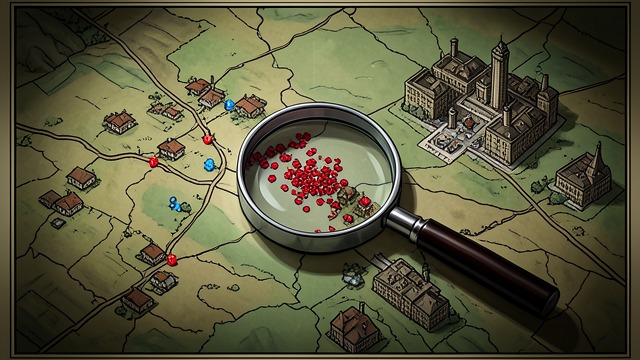
Kidney Cancer Counties
Opposite Extremes
Both the highest and lowest cancer rates cluster in small rural counties.
Statistical Explanation
Sampling variation, not rural virtue or vice, explains the pattern.
The Law of Small Numbers

Small Samples Misread
Research Risk
Psychologists often choose samples too small to reliably confirm true hypotheses.
Intuitive Overreach
Researchers expect short sequences to resemble the population too closely.
Randomness as Pattern

Chance Resists Stories
Apparent Regularity
Birth sequences and bombing patterns look intentional even when random.
Causal Hunger
System 1 searches for causes where sampling variation is sufficient.
Regression Misunderstood

The Return to Average
Performance Fluctuation
Exceptional outcomes tend to be followed by more moderate ones when correlations are imperfect.
False Causation
Observers mistake natural regression for the effect of praise or punishment.
Statistical Humility

Correcting Intuition
Baselines
Prediction should begin from average outcomes and plausible base rates.
Moderation
Specific evidence deserves influence only in proportion to its predictive validity.
At the beginning of Part 2
Early in Part 2
After the kidney cancer discussion
Middle of Part 2
Near the end of Part 2
